New Year Wellness Planning at purelyIV
Start the year with a simpler wellness plan. Explore hydration, recovery, memberships, labs, and clinician-guided support that fits real life.

purelyIV education · Hydration support · Heat safety
By Erin Boumansour
When temperatures climb and the heat index stays high, your body works harder to cool itself. Sweating helps, but it also means you can lose fluid and electrolytes faster than you expect.
Water is still the first step. Shade, rest, and cooling matter too. If you are already feeling run down or cannot keep up with oral fluids, a clinician-reviewed IV hydration visit may be a practical support option in the right situation.
This guide explains what heat does to hydration, when supportive IV care can make sense, and when symptoms call for urgent medical attention instead. If you are comparing service options, start with our IV services overview or the Straight Hydrate IV Treatment page.
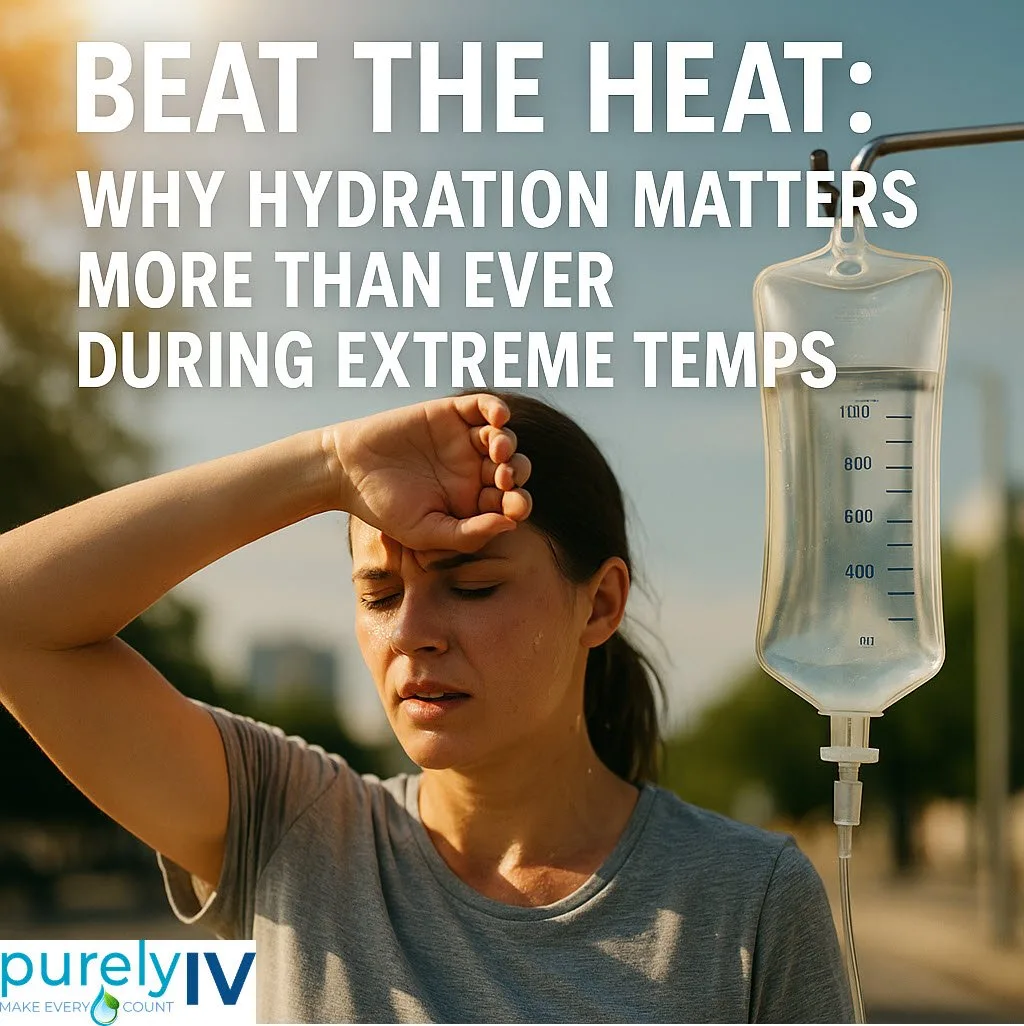
In extreme heat, your body uses sweat to regulate temperature. That process is useful, but it also pulls water and electrolytes out of circulation faster than a normal day would.
For many people, the early signs are subtle at first: thirst, headache, fatigue, or a foggy feeling that is easy to dismiss. The longer heat exposure continues, the more important it becomes to slow down and replace fluids before symptoms snowball.
If symptoms escalate to confusion, fainting, trouble breathing, chest pain, or a very high body temperature, do not try to manage it with hydration alone. Get emergency care right away.
Most people still do best with water, electrolytes, rest, and reduced heat exposure. IV hydration is not a replacement for those basics, and it is not a shortcut for heat stroke or another urgent medical problem.
When a clinician reviews the situation and decides IV care is appropriate, it can be a useful way to support fluid replacement for someone who is having trouble keeping up orally or who needs a more controlled setting. That is why many people also read our IV therapy myths guide before deciding what is actually useful versus just marketing language.
If you want a closer look at our hydration-focused service page, see Straight Hydrate IV Treatment. For a broader look at how mobile care works, our mobile IV therapy article explains the basic workflow.
Review Straight Hydrate and our IV services overview to see how hydration-focused care is approached before you decide whether a mobile visit makes sense.
A mobile hydration visit can be convenient when the setting itself is part of the problem. If heat, travel, work, or a crowded schedule make it harder to get care, a home, office, or hotel visit can reduce friction without changing the need for screening and oversight.
Convenience is helpful, but it should never replace judgment. A good provider will still screen, monitor, and refer out when the situation calls for a higher level of care.
If you are considering hydration support during extreme heat, it helps to ask a few direct questions before scheduling anything.
Those questions are useful whether you are reading about a first hydration visit or comparing it with other mobile options. If you want the broader context, our post on mobile IV therapy in Metro Detroit is a good companion read.
Heat-related illness can move quickly. If someone becomes confused, faints, has chest pain, struggles to breathe, stops sweating, vomits repeatedly, or has a very high temperature, those are not situations to manage with routine hydration support.
The safer move is to stop what you are doing, cool the person down, and get urgent medical help. That is also why a careful provider should be willing to say no when the presentation is outside the scope of a mobile hydration visit.
Extreme heat raises the stakes for hydration, but the answer is not to treat every tired or thirsty feeling the same way. Water, cooling, and rest stay first-line. IV hydration may be a reasonable support option when a clinician thinks it fits, especially if oral intake is difficult or the day has already been derailed by heat exposure.
If you want to compare hydration support, read the service details, or talk through whether a mobile visit makes sense, start with Straight Hydrate or contact our team.
Our team can review symptoms, timing, and service fit so you can choose between hydration support, another IV service, or a higher level of care.
Disclaimer: The information in this blog post is for informational purposes only. It is not a substitute for professional medical advice, diagnosis, or treatment. Always seek the guidance of a qualified health professional with any questions you may have regarding a medical condition.