Clear screening
Good mobile care starts with intake questions, medication review, and a reasoned decision about whether the visit belongs in the home setting at all.

purelyIV education · Mobile IV therapy · Metro Detroit
By Erin Boumansour
Mobile IV therapy has grown because it solves a real problem: people want hydration, nutrients, or clinician-reviewed support without losing half the day to travel and waiting rooms.
In Metro Detroit, the appeal is not just speed. It is the combination of convenience, nurse-led care, and a workflow that can happen at home, in the office, or in a hotel when that setting is appropriate.
This article explains what mobile IV therapy is, why it fits busy schedules, and what to confirm before you book. If you are comparing providers, our safe IV provider checklist is a useful companion.
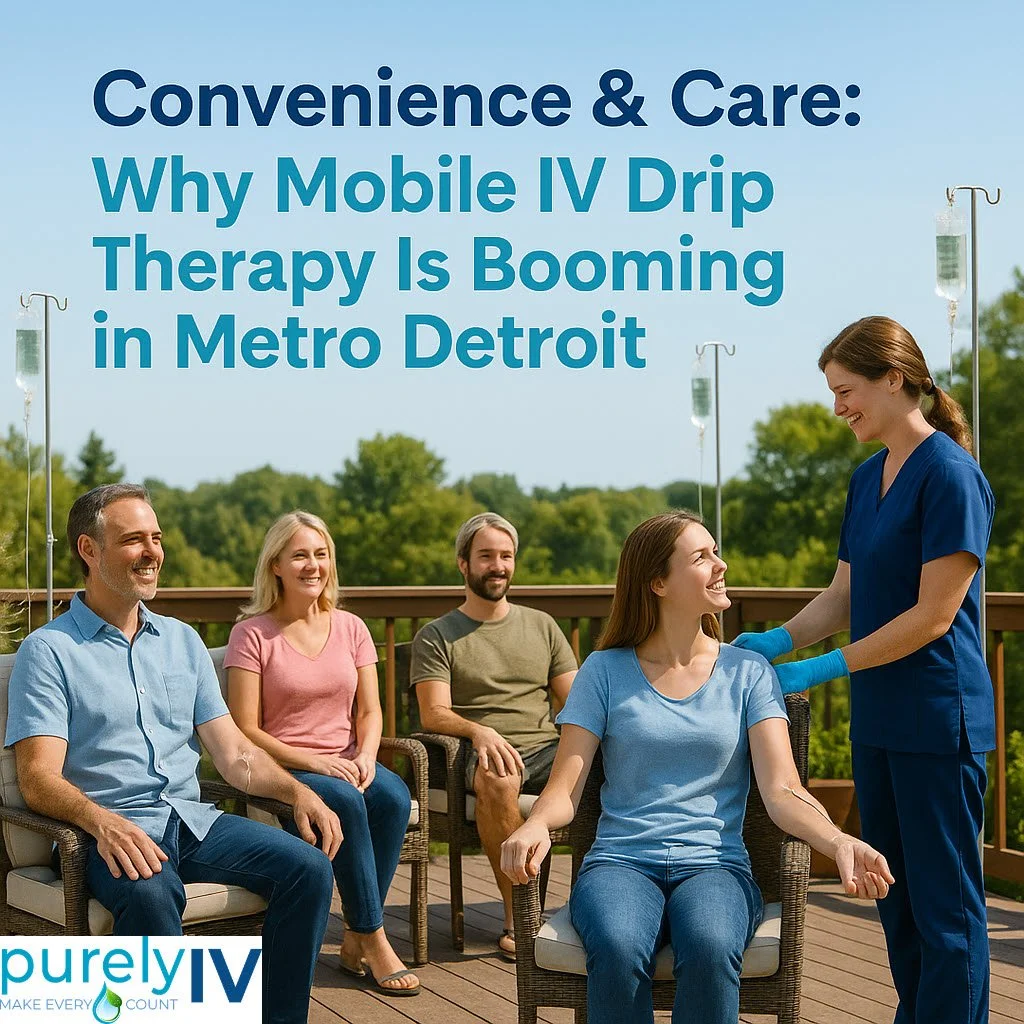
Mobile IV therapy brings the visit to the patient instead of asking the patient to build an entire day around the appointment. A licensed nurse can come to a home, office, hotel, or event space to provide IV fluids or other clinician-approved support.
The clinical steps still matter. A proper intake, appropriate screening, and clear treatment selection should happen before the infusion starts so convenience does not replace judgment.
For many people, the appeal is practical. When traffic, work, childcare, travel, or recovery already fill the calendar, a home visit can make care easier to access without making it less deliberate.
That convenience is the reason many people search for mobile IV therapy, but the care model only works when screening and oversight stay in place.
Good mobile care starts with intake questions, medication review, and a reasoned decision about whether the visit belongs in the home setting at all.
The actual infusion should be nurse-led, not treated like a drop-off service. That is how the provider can monitor comfort, line placement, and tolerance in real time.
Patients should know what is being administered and where it comes from. If a provider cannot explain the product, the pharmacy relationship, or the ingredients, keep asking questions.
A safe workflow includes a plan for vitals, symptom checks, aftercare, and what happens if the clinician decides a different setting is safer.
If you want a more detailed comparison framework, our safe provider checklist covers the questions that matter most. Our IV therapy myths article is also helpful if you want to separate practical benefits from marketing language.
See how purelyIV approaches screening, NP oversight, RN-delivered care, and at-home convenience before you decide whether mobile IV therapy fits your needs.
It is usually most useful when a patient wants supportive care that is easy to access and can still be screened appropriately. That makes it a strong fit for people who want convenience without turning the visit into a shortcut.
Before you schedule, ask how screening works, who delivers the care, and what happens if the clinician decides the visit should move to another setting or a different service path. If you are comparing mobile care to other home-visit models, our at-home flu and COVID testing article shows how a nurse-led visit can still keep the steps clear.
Those questions are not about being difficult. They are how you make sure convenience is still paired with clinical oversight.
Mobile IV therapy has grown because it solves a real problem: people want care that fits their lives without losing the safety and structure that should come with a medical visit.
For Metro Detroit patients, the best version of that model is simple: thoughtful screening, licensed nursing care, transparent products, and a plan that knows when to say no. If you want help deciding whether mobile IV therapy is the right next step, start with IV services or talk with our team.
See how purelyIV approaches mobile IV therapy, provider screening, and at-home convenience so you can make a decision that stays grounded in clinical oversight.
Disclaimer: The information in this blog post is for informational purposes only. It is not a substitute for professional medical advice, diagnosis, or treatment. Always seek the guidance of a qualified health professional with any questions you may have regarding a medical condition.