New Year Wellness Planning at purelyIV
Start the year with a simpler wellness plan. Explore hydration, recovery, memberships, labs, and clinician-guided support that fits real life.

purelyIV education · Athletic recovery · IV therapy
By Erin Boumansour
Whether you are training for a race, stacking strength sessions through the week, or just trying to feel normal again after a long block of workouts, recovery can get complicated quickly. A good plan still starts with sleep, food, and hydration, but some athletes also want a clinician-reviewed way to support the recovery side of the equation.
That is where IV services can be useful for the right person in the right setting. In this guide, we will walk through where Recovery Rush, Straight Hydrate, and other recovery-focused conversations fit, and what to confirm before you book.
This article is educational only and not medical advice. If you have chest pain, trouble breathing, fainting, severe dehydration, heat illness symptoms, or another urgent concern, seek immediate medical care instead of waiting on a mobile visit.
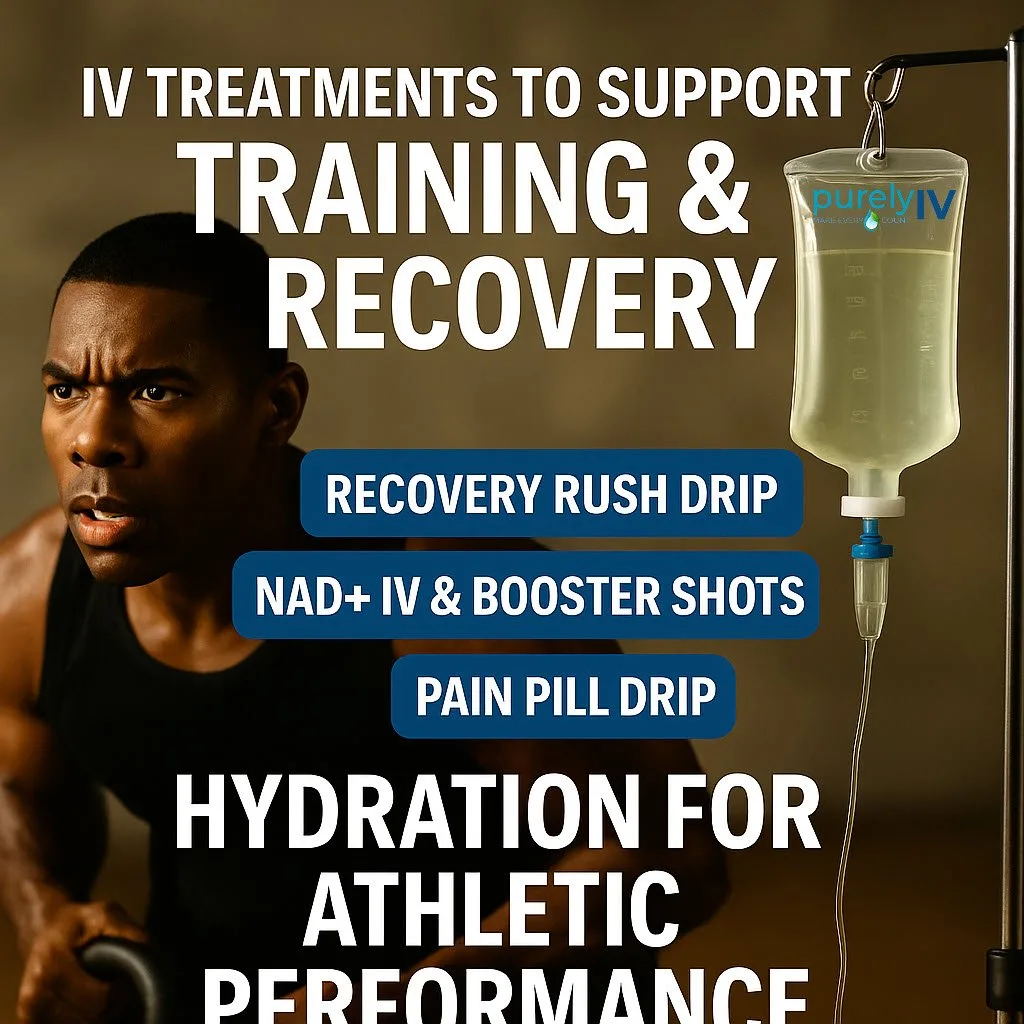
For athletes, hydration is not just about feeling thirsty. Fluid balance affects endurance, temperature regulation, cramp risk, and how quickly you bounce back after a hard session.
IV hydration can be a practical option when someone already knows they are not dealing with an emergency, but still wants a more direct way to replenish fluids and electrolytes under clinician oversight. It should not be presented as a shortcut around rest, nutrition, or good training decisions.
If your goal is to feel more recovered without overstating what IV therapy can do, a service conversation should stay practical: what problem are you trying to solve, what ingredients are being used, and what does the provider need to know before treating you?
Athletes often ask about NAD+ because it is tied to cellular energy metabolism. That interest is reasonable, but the discussion should stay grounded: NAD+ is not a promise of better performance, and it should not be framed as a shortcut around recovery basics.
If NAD+ or booster shots are being considered, the more useful questions are whether the product is clinically appropriate, how it fits the person's training load and symptom pattern, and whether a simpler hydration-focused option would make more sense first.
If you want a fuller framework before you decide, our safe IV provider guide is the best companion read. It is especially helpful when you are comparing recovery services across multiple providers.
Start with the service that best matches your goal: a more recovery-oriented visit with Recovery Rush, or a simpler hydration-first option with Straight Hydrate.
Even if IV therapy is part of the plan, the fundamentals still matter most: adequate sleep, enough food, sensible hydration, and realistic training load. The drip should support recovery, not replace the habits that make training sustainable.
That is why the best recovery conversations are usually specific. If you mainly need fluids, a hydration-first visit may be enough. If you want to compare a fuller recovery option against a simpler one, the right answer comes from screening, not from marketing language.
If you want help deciding which path makes sense, you can also talk with our team before you book.
IV therapy can be a useful recovery-support tool for some athletes, but it should stay grounded in the real goal: helping the right person get the right support without overselling what the visit can do.
If you are comparing recovery options in Metro Detroit, start with the simplest medically appropriate choice, ask clear screening questions, and use a provider that can explain why a formula fits your situation.
Our team can help you compare hydration-first and recovery-focused options, then decide whether a visit, more screening, or a different next step makes the most sense.
Disclaimer: The information in this blog post is for informational purposes only. It is not a substitute for professional medical advice, diagnosis, or treatment. Always seek the guidance of a qualified health professional with any questions you may have regarding a medical condition.