Wedding Day IV Hydration Playbook
Learn how mobile IV therapy may fit into wedding-week hydration planning, timing, and recovery support for adults in Metro Detroit.

purelyIV education · Neuropathy support · ALA and B12
By Erin Boumansour
Neuropathy happens when nerves are damaged or not working properly. It can lead to symptoms such as pain, tingling, numbness, burning, weakness, or balance problems.
There are many possible causes. Diabetes and vitamin B12 deficiency are two of the most common. Chemotherapy, autoimmune conditions, alcohol use, certain medications, toxins, and other health issues can also play a role.
This article looks at why alpha-lipoic acid, often called ALA, and vitamin B12 come up in conversations about neuropathy, nerve health, and IV therapy.
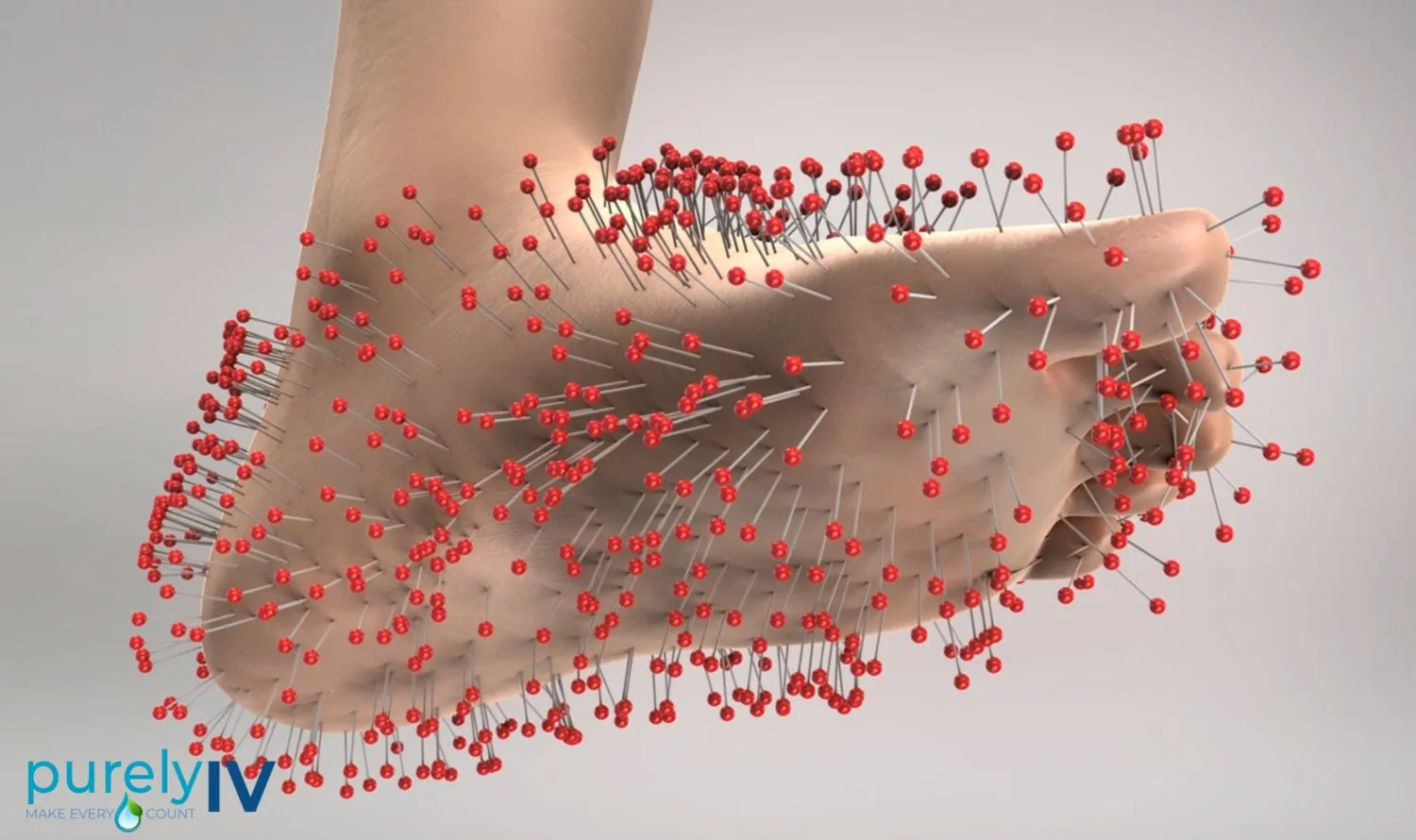
Peripheral neuropathy affects nerves outside the brain and spinal cord. These nerves help carry messages between your body and your nervous system.
When those nerves are irritated or damaged, symptoms may show up in the hands, feet, legs, or other areas.
Common symptoms can include:
Neuropathy is not one single condition with one single cause. That is why understanding the reason behind the nerve problem matters.
Neuropathy can come from many different health issues. Some of the more common causes include:
Because the cause matters, neuropathy symptoms should be discussed with a qualified healthcare professional. IV therapy may be part of a supportive wellness conversation, but it is not a replacement for diagnosis or medical care.
Diabetic peripheral neuropathy is one of the most common forms of neuropathy. It can happen when high blood sugar damages nerves and the small blood vessels that supply them over time.
Several processes are involved.
High blood sugar can increase oxidative stress. Oxidative stress happens when the body has more free radical activity than it can easily balance.
Over time, that stress can affect nerve tissue and blood vessels. Diabetes can also reduce blood flow to nerves, which means nerves may receive less oxygen and fewer nutrients.
Mitochondria, which help cells produce energy, can also be affected. When nerve cells do not get the energy and blood flow they need, pain, numbness, weakness, or tingling may develop.
Diabetic neuropathy often affects the feet and legs first, although it can also affect the hands.
Common symptoms include:
Some people also develop autonomic symptoms, such as changes in sweating, digestion, bladder function, or blood pressure.
If you have diabetes and notice nerve symptoms, it is important to talk with your healthcare team. Blood sugar management, foot care, medication review, and medical evaluation all matter.
Alpha-lipoic acid is an antioxidant involved in cellular energy and oxidative stress balance.
ALA has been studied in diabetic neuropathy because oxidative stress is one of the processes involved in nerve damage. Research has looked at whether ALA may support nerve comfort, nerve conduction, and oxidative stress balance in people with diabetic neuropathy.
That does not make ALA a cure for neuropathy. It means ALA is one of the nutrients researchers have studied in this area.
For people interested in ALA, the key question is whether it fits their health history, medications, and current care plan.
Vitamin B12 is essential for nerve health. It helps support the myelin sheath, which is the protective covering around nerves.
When B12 levels are too low, nerves can be affected. This can lead to tingling, numbness, weakness, balance problems, fatigue, or brain fog.
B12 helps the body make and maintain myelin. Without enough B12, nerve signals may not travel as smoothly.
B12 also helps process homocysteine, an amino acid that can build up when certain nutrients are low. Elevated homocysteine has been linked with nerve and cardiovascular concerns.
B12 also plays a role in normal DNA production and cell repair, which matters for healthy nerve function.
B12 deficiency can happen for several reasons, including:
If B12 deficiency is suspected, lab testing and medical guidance are important. The right plan depends on the cause and severity of the deficiency.
B12-related nerve symptoms may include:
These symptoms can overlap with other conditions. That is why it is important not to guess. Testing and medical evaluation can help clarify what is going on.
B12 may be given orally, by injection, or as part of an IV formulation depending on the person and the reason for low levels.
For people with absorption issues, injections or IV-based support may be discussed because they bypass the digestive tract.
At purelyIV, B12 appears in many IV therapies, and we also offer B12-related nutrient support. The right approach depends on your goals, health history, and whether you are addressing general wellness or a known deficiency under medical guidance.
IV therapy delivers fluids and selected nutrients directly into the bloodstream.
For neuropathy-related wellness conversations, the nutrients that often come up are ALA and B12. ALA is discussed because of oxidative stress and nerve function research. B12 is discussed because it plays a direct role in nerve health and myelin support.
IV therapy should not be viewed as a standalone neuropathy treatment. Neuropathy has many possible causes, and those causes need proper medical evaluation.
Still, for some adults, IV nutrient support may fit into a broader plan focused on hydration, wellness, and nutrient support.
ALA and B12 are different nutrients with different roles.
| Factor | Alpha-Lipoic Acid (ALA) | Vitamin B12 |
|---|---|---|
| Primary role | Supports oxidative stress balance and cellular energy pathways | Supports red blood cell formation, nerve function, and myelin health |
| Why it comes up in neuropathy | Studied in diabetic neuropathy and oxidative stress research | Important when neuropathy is related to low B12 or absorption issues |
| Common discussion area | Diabetic neuropathy, oxidative stress, nerve comfort research | B12 deficiency, pernicious anemia, malabsorption, nerve health |
| IV or injection relevance | May bypass digestive absorption and provide direct nutrient delivery | May help when oral absorption is limited or when faster repletion is recommended |
| Important caution | Should be reviewed with medications and health history | Deficiency should be confirmed and managed appropriately when suspected |
These nutrients are not interchangeable. ALA does not replace B12, and B12 does not replace ALA. The right conversation depends on the cause of the nerve symptoms.
IV therapy may support hydration and deliver nutrients that play a role in nerve and cellular health.
It cannot diagnose neuropathy. It cannot identify the cause of nerve damage. It should not replace diabetes care, oncology care, neurology care, primary care, medication management, physical therapy, or emergency care.
If neuropathy symptoms are new, worsening, severe, or affecting your ability to walk or function, you should seek medical evaluation.
Talk with a qualified healthcare professional if you have:
Seek urgent or emergency care if symptoms are sudden, severe, one-sided, associated with chest pain, trouble breathing, confusion, fainting, or signs of stroke.
purelyIV provides mobile IV therapy for adults in Metro Detroit. We come to your home, office, or hotel, and a licensed RN delivers your IV therapy.
For people asking about nerve health support, the most relevant ingredients are usually B12 and alpha-lipoic acid.
Most purelyIV IV therapies include B12, and ALA is available in select formulations or add-on contexts depending on the current service menu. If you are interested in ALA or B12, we can help you understand which IV options include those nutrients.
You can learn more about B12 IV therapy and nutrient support, alpha-lipoic acid in IV therapy, or explore all IV services.
Neuropathy can be frustrating, painful, and disruptive. Diabetes and B12 deficiency are two common contributors, but they are not the only ones.
ALA and B12 are both relevant to nerve health conversations, but in different ways. ALA is studied for oxidative stress and diabetic neuropathy research. B12 is essential for nerve function and can be especially important when deficiency or absorption problems are involved.
IV therapy may be useful as supportive nutrient care for some adults, but neuropathy should still be evaluated and managed with the right medical team.
If you are curious about ALA, B12, or IV nutrient support, contact purelyIV or review our IV services to learn which options may fit your goals.
Disclaimer: The information in this blog post is for informational purposes only. It is not a substitute for professional medical advice, diagnosis, or treatment. Always seek the guidance of a qualified health professional with any questions you may have regarding a medical condition.